
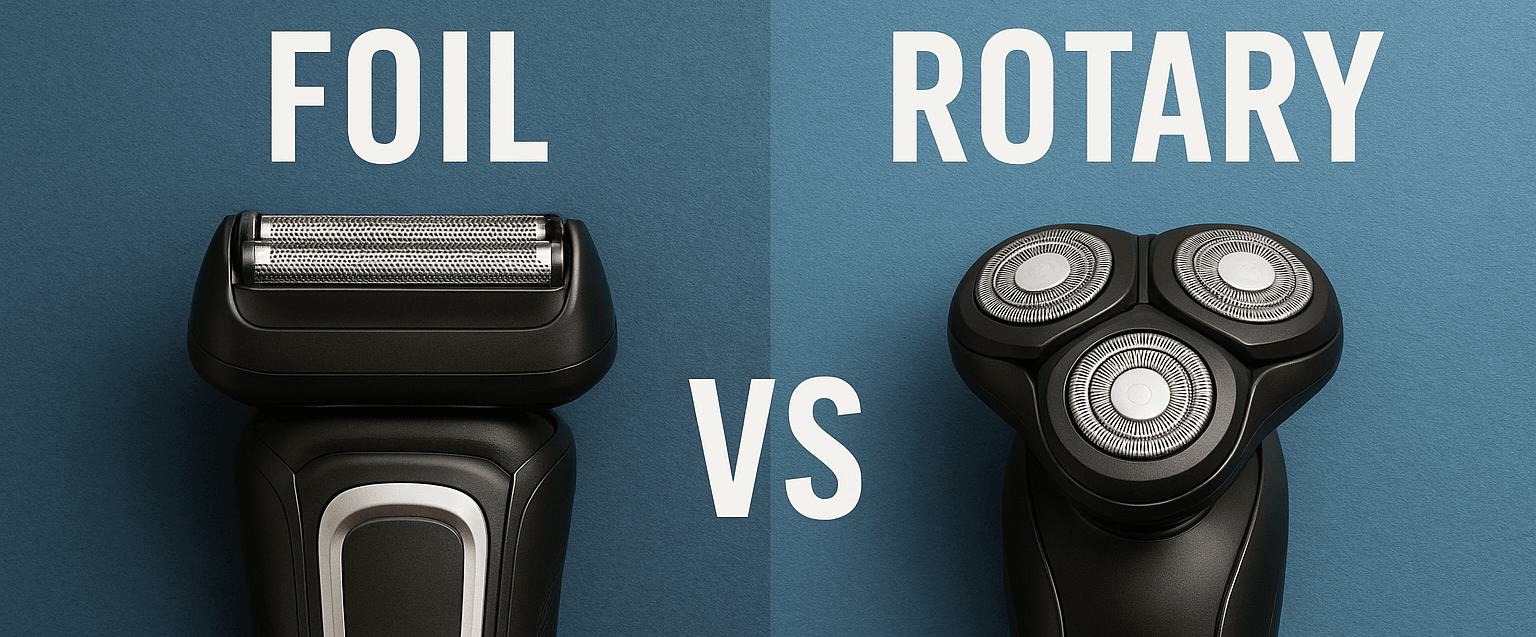
When choosing between foil and rotary electric razors, it’s important to understand how each works and what fits your needs best. Foil shavers have straight blades under a thin metal screen, giving a closer and more precise shave for sensitive, flatter skin. Rotary shavers have circular heads that move in different directions, which work well for curved areas and thicker, tougher hair.
Your choice depends on your skin type, hair growth pattern, and how you prefer to shave. Foil shavers usually offer a smoother shave with less irritation, while rotary shavers are better at handling longer or uneven hair. Knowing these differences helps you pick the right tool for your daily grooming.
Key Takeaways
- Foil shavers provide a close, precise shave ideal for sensitive skin.
- Rotary shavers handle thick or uneven hair and curved areas well.
- Your skin type and shaving routine affect which razor works best for you.
Foil vs Rotary Electric Razors: Key Differences
You will notice important differences in how these shavers cut hair, how their blades are designed, and how they move during use. These factors affect how they perform on different skin types and hair lengths.
Cutting Mechanism
Foil shavers use a thin, perforated metal screen that covers the blades. Hair enters the holes and is cut by the blades moving back and forth underneath. This design works best when you shave in straight lines.
Rotary shavers have three or four circular heads with spinning blades inside. The circular blades capture hair growing in many directions. This makes rotary shavers good for shaving areas with irregular hair growth.
Your choice here affects how efficiently the shaver cuts hair and how close to the skin the shave feels. Foil shavers usually provide a closer shave on flat skin. Rotary shavers handle curved areas and longer hair better.
Blade Design
Foil razors use thin, straight blades called cutters. These blades vibrate rapidly to cut hair caught in the foil’s holes. The straight cutters allow precise and controlled strokes.
Rotary razors have curved blades that spin inside round heads. The blades are hidden under flexible guards that guide hairs inside for cutting. This design lets the shaver glide in circular moves.
The blade style influences the amount of skin contact. Foil blades press closely against the skin. Rotary blades move with the skin’s curves, making them less irritating for some users.
Movement Patterns
Foil shavers require you to move the razor in straight lines or small back-and-forth motions. This approach is best for fine control and close results.
Rotary shavers are designed to be used in circular or sweeping motions. You can make gentle circles or irregular passes to catch all hairs on curved areas like the chin or neck.
Your shaving technique will differ depending on the type. Foil models suit a careful, linear stroke. Rotary models allow looser motion and adapt better when you move the razor in multiple directions.
Pros and Cons of Foil Electric Razors
Foil electric razors offer a close and precise shave with a design that suits certain hair types better. You will find that they handle straight hair well but may struggle with very curly or thick hair. They also differ in how easy they are to clean and how much noise they make during use.
Precision and Performance
Foil shavers use a thin layer of metal foil that covers oscillating blades underneath. This setup helps lift hairs before cutting them, giving you a very close and smooth shave. If your hair grows mostly straight or slightly curved, a foil shaver can give better results than a rotary one.
However, if your hair is coarse or curly, you might notice the foil shaver misses some hairs or requires extra passes. Foil shavers work best when you shave in straight lines because the foil moves back and forth, making them less flexible on curves or tricky angles.
Ease of Cleaning
Cleaning a foil shaver is usually straightforward. Many models let you pop off the foil to rinse the blades under water. This helps remove hair clippings and reduces buildup, keeping your shaver performing well.
You do have to be a bit careful when handling the foil, as it is thin and can tear if dropped or cleaned roughly. Some models come with cleaning brushes, which are useful for maintenance if you don’t rinse the shaver regularly.
Noise Level
Foil shavers tend to be louder than rotary shavers. The oscillating blades under the foil create a sharper, higher-pitched sound. If noise bothers you, this is something to keep in mind.
The sound comes from the motor speed and blade motion, so quieter models might cost more. Despite the noise, many users find the quality of the shave worth the trade-off because of the foil’s close cutting ability.
Pros and Cons of Rotary Electric Razors
Rotary electric razors offer specific benefits and downsides that affect comfort, hair handling, and maintenance. Understanding these aspects will help you decide if a rotary shaver fits your grooming style and needs.
Flexibility and Comfort
Rotary shavers typically have three circular heads that move independently. This design allows the shaver to follow the curves of your face more easily than some other types. You can expect a smoother experience around tricky areas like your chin and jawline.
Because the heads adjust to different angles, rotary shavers usually feel comfortable on varied skin types. They are less likely to cause irritation if you have thick or coarse hair. However, some users might notice they are not as precise in very sensitive or flat areas.
Handling Longer Hair
Rotary shavers handle longer and thicker hairs better than foil shavers. Their spinning heads are designed to cut hair that grows in multiple directions. You won’t need to trim your beard as often before using a rotary shaver.
If your hair is curly or grows unevenly, a rotary razor can pick up and cut hairs efficiently. The machine’s motion helps lift longer hairs for a closer shave. However, if your hair is very short or fine, rotary shavers might struggle to give you a clean, close finish.
Maintenance Requirements
Rotary shavers need regular cleaning to keep them working well. Hair tends to get caught inside the rotating heads, so you should remove and rinse them often. Some models include a cleaning station, but manual cleaning with a brush is common.
Replacing the shaving heads after a set period—usually 12 to 18 months—is important to maintain performance. These parts wear down faster compared to foil shaver foils. You should also oil the blades occasionally to avoid damage and keep the shaver running smoothly.
Suitability for Different Skin Types
Choosing between foil and rotary electric razors depends a lot on your skin’s sensitivity and toughness. Each type works better with certain skin types and can affect comfort and results during shaving.
Sensitive Skin
If you have sensitive skin, a foil shaver is usually a better choice. Foil shavers have thin, straight metal foils that cover oscillating blades. This design offers a gentler, more controlled shave.
The thin foil protects your skin from direct contact with the blades, reducing irritation and the risk of razor burn. It also moves in straight lines, which helps avoid pulling or tugging on hair.
Foil shavers work best if you shave daily or every other day because they give a close shave with less friction. They are better at preventing bumps and redness for sensitive skin. Look for models that have extra cushioning or hypoallergenic foils to enhance skin comfort.
Normal and Tough Skin
If your skin is normal or tougher, a rotary shaver might be more effective for you. Rotary shavers use circular heads with spinning blades underneath. This design adapts well to the curves of your face, making it easier for you to shave areas like the chin and jawline.
The circular motion of rotary shavers handles longer or thicker hair better. This means you may not need to shave as often. However, rotary shavers can sometimes cause a bit more irritation if you press too hard or move too quickly.
If your skin is tougher, you can use a rotary shaver with confident, firm strokes in circular motions. These shavers are also quieter and better at handling less frequent shaves or patchy hair growth.
Shaving Experience Comparison
Your shaving experience changes based on the type of electric razor you use. Differences in motor action and blade design impact how fast you shave and the closeness of the shave you get.
Speed and Efficiency
Rotary shavers are designed with three circular heads that move independently. This makes them good at following the curves of your face, especially around the chin and neck. You can use them in slow, circular motions, which often speeds up the shaving process for people with longer or thicker hair.
Foil shavers, on the other hand, have straight oscillating blades beneath a thin metal foil. They work best with short, straight hair and are ideal for shaving in straight lines. You may find foil shavers less efficient on longer hair but more precise for quick daily shaving.
In general, rotary shavers handle varied hair lengths better, while foil shavers excel in fast, precise trims on short hair.
Close Shave Results
Foil shavers tend to provide a closer shave compared to rotary models. The straight, sharp blades under the foil grip hair firmly and cut it close to the skin. This design reduces the chance of missing patches and results in a smooth finish.
Rotary shavers give a comfortable shave but usually do not reach as close. Their circular blades are better for blends and slower cuts rather than ultra-close trims. However, rotary shavers cause less irritation for some users because they adapt to uneven skin surfaces.
If your priority is a very close shave, foil models are often the better choice. If you want less irritation with decent closeness, rotary can work well.
Best Use Cases for Foil and Rotary Razors
Choosing between foil and rotary electric razors depends on how you shave and where you need to use the shaver. Certain features of each type make them better suited for specific daily routines and travel situations.
Daily Shaving Needs
Foil razors work best if you shave every day or nearly every day. Their straight, thin foil covers trap hair well and provide a clean, close shave. This makes them ideal for fine or thin hair. The up-and-down motion helps you get an even shave, especially on flat parts of your face like cheeks and neck.
Rotary razors suit you better if your hair is thicker, longer, or grows in different directions. Their circular heads can adjust to your face’s curves, making it easier to reach tricky spots like your chin and jawline. You can also use rotary razors less often since they handle coarse hair better.
Travel and Portability
If you travel often, foil razors are generally lighter and more compact. They usually have a slimmer design, so they fit easily in your bag or carry-on. Many foil models come with protective caps or cases, which protect the blades during transport.
Rotary razors tend to be bulkier because of their round heads and multiple blades. They may take up more space in your luggage. However, rotary shavers often have longer battery life, which can be useful if you are on longer trips without easy access to charging.
| Feature | Foil Razors | Rotary Razors |
|---|---|---|
| Weight | Usually lighter | Usually heavier |
| Size | Slim and compact | Bulkier due to round heads |
| Battery Life | Moderate | Longer |
| Ideal for Travel | Easy to pack | Better for longer trips |
Technological Features and Innovations
Electric razors today offer specific features that improve comfort, convenience, and efficiency. Key factors include whether you prefer wet or dry shaving and how the battery performs during use and charging.
Wet vs Dry Shaving
Rotary shavers often support wet shaving, meaning you can use them with shaving cream, gel, or even in the shower. This can make your shaving experience more comfortable and reduce skin irritation.
Foil shavers are typically designed for dry shaving but many models now offer wet shave options too. Dry shaving with foil razors tends to be faster and easier to clean afterward.
If you have sensitive skin or prefer a closer shave with lubrication, look for a shaver labeled as waterproof or wet/dry. This feature allows more flexibility in your routine and adds convenience, especially if you shave in the bathroom or shower.
Battery Life and Charging Options
Battery life varies between models but most modern electric razors offer at least 40 to 60 minutes of cordless use after a full charge.
Foil shavers usually charge faster but may need more frequent charging due to their motor design. Rotary shavers often provide longer runtime and have more advanced charging tech like USB-C or quick charge.
Some shavers come with LED indicators showing battery status and charging progress. Others include a travel lock to prevent accidental startup. Charging options can range from standard plugs to wireless charging stands, helping you keep your shaver ready without hassle.